


 English
 русский
 Deutsch
 عربى
عربى
Inicio / Noticias / Noticias de la industria / Can the Wrong Hose Fitting Disrupt Fireground Water Supply
Noticias de la industria


Can the Wrong Hose Fitting Disrupt Fireground Water Supply
 2026.09.04
 Noticias de la industria
Contenido
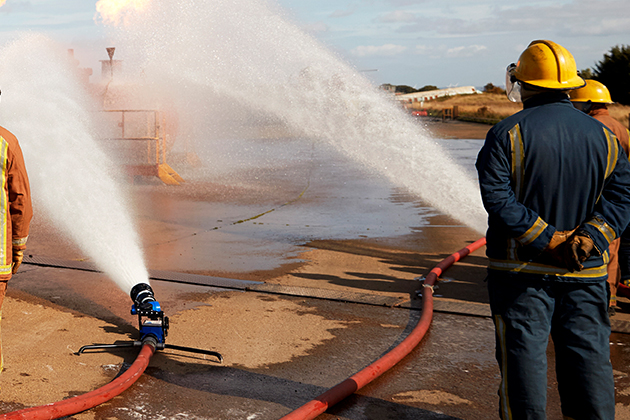
Fireground water supply depends on more than the hose itself. The connection between a hose, hydrant, pump, nozzle, or appliance also has a direct role in keeping water moving through the system. A fitting that looks physically similar to the required connection may still have a different thread standard, sealing method, size, or pressure rating.
This makes fire fighting hose fittings an important part of fireground water management. A mismatch may prevent proper assembly, create leakage, restrict the waterway, or require an unexpected adapter during an emergency operation.
Where Can a Fitting Mismatch Cause Problems?
1. Thread Standards May Not Match
Thread compatibility is a key consideration for threaded fire hose connections. NH/NST, NPSH, and NPT are not interchangeable in every configuration.
- NH/NST: Commonly used for fire hose connections in the United States and requires matching NH/NST threads.
- NPSH: Uses straight threads and has the same threads-per-inch relationship as corresponding NPT sizes, but the thread profile does not taper.
- NPT: Uses tapered pipe threads and is primarily designed for pipe and fitting connections.
A fitting can therefore have the correct nominal size but still fail to provide the intended connection. The gasket and sealing surface also matter because straight-thread fire hose connections commonly rely on a gasket rather than the threads themselves to create the water seal.
Does Size Alone Confirm Compatibility?
No. Nominal diameter is only part of the specification. Buyers and fire protection professionals may also need to verify the connection standard, male or female configuration, coupling type, material, and pressure rating.
| Specification | Why It Matters |
| Nominal size | Matches the intended hose or equipment waterway |
| Thread standard | Determines whether threaded components can mate correctly |
| Male/Female configuration | Determines the mechanical connection between components |
| Seal type | Supports a watertight connection under operating pressure |
| Pressure rating | Confirms suitability for the required working conditions |
| Material | Affects weight, corrosion resistance, and mechanical durability |
For example, some specifications for Storz couplings require PN16-rated fittings with a nominal working pressure of 1600 kPa. Other fire hose assemblies can have different testing and operating requirements, so the coupling should be evaluated as part of the complete hose connection rather than as an isolated component.
Could the Wrong Connection Restrict Fireground Operations?
A connection problem does not always mean that water completely stops. A partially unsuitable fitting can create other operational difficulties.
- Leakage at the joint: An incorrect sealing arrangement can allow water to escape under pressure.
- Connection delays: Crews may need to locate an adapter before connecting equipment.
- Reduced waterway: An unsuitable reducer or transition piece may affect the internal flow path.
- Mechanical stress: Forced or poorly matched connections can place additional load on the coupling and hose assembly.
These issues become particularly important during high-demand operations, especially with large-diameter supply hose or connections between equipment using different standards.
How Do Storz and Threaded Couplings Differ?
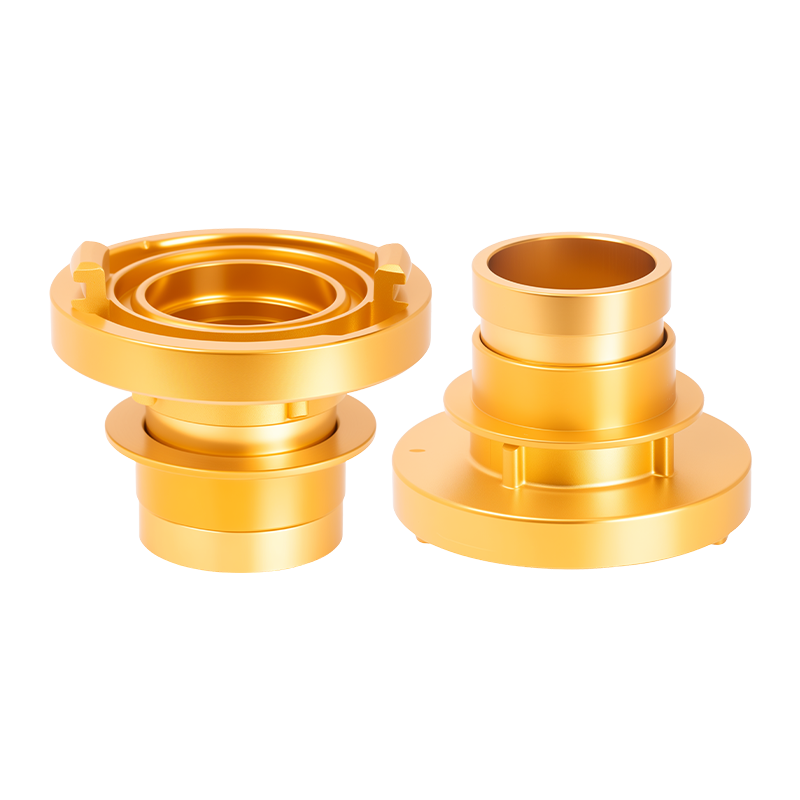
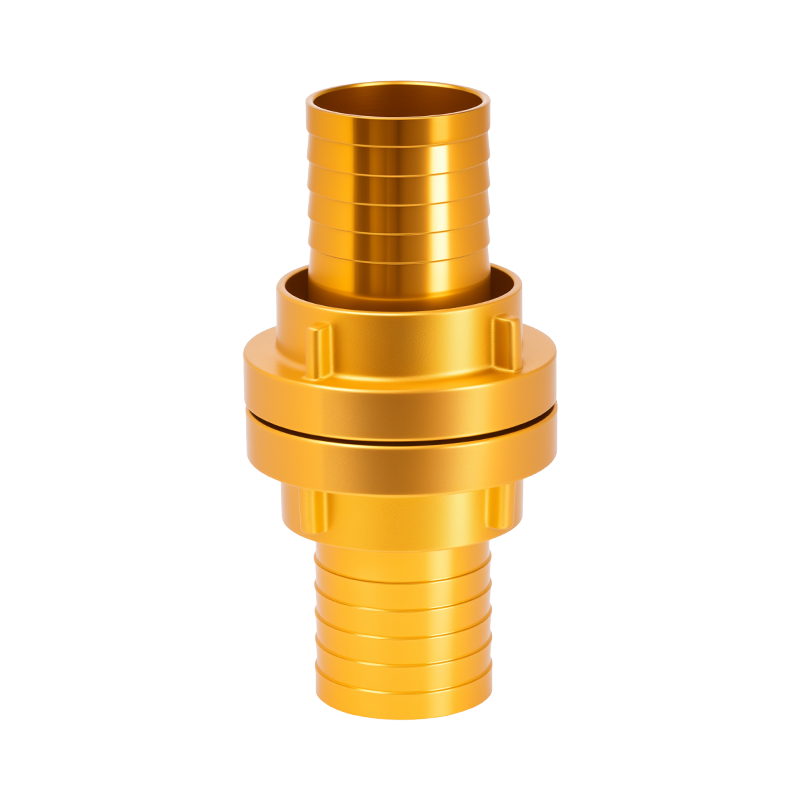
Storz connections provide a different approach from conventional male-and-female threaded couplings. The coupling halves are symmetrical and connect through a quarter-turn locking mechanism rather than conventional screw threads. This design is used across various fire protection and large-diameter hose applications.
Threaded fire fighting hose fittings , by contrast, require careful attention to thread designation. A 2.5-inch fitting, for example, should not be specified only by diameter. The purchasing specification should identify the applicable thread standard and connection configuration.
What Should Be Checked Before Deployment?
- Confirm the hose inside diameter and coupling size.
- Verify NH/NST, NPSH, NPT, Storz, or another required connection standard.
- Check male/female orientation for threaded assemblies.
- Verify gasket and sealing-surface specifications.
- Compare the fitting pressure rating with the hose and system requirements.
- Use a compatible adapter for transitions between different connection standards.
Reliable Connections Start With the Correct Specification
Fireground water supply is a connected system, and the coupling is part of that system. The wrong fitting can create compatibility issues at the exact point where reliable water delivery is required.
Rather than judging a fitting by appearance or nominal size alone, specifications should cover the connection standard, dimensions, sealing method, pressure rating, and intended application. Properly matched fire fighting hose fittings help create a connection system that is ready to work with the hose, appliance, hydrant, and nozzle configuration involved.
Relacionado Productos
-
 (+86) 18968568369
Llámenos
-
 [email protected]
Envíenos un mensaje
-
 No. 32, Mechanical and Electrical Industrial Park, Donghai Avenue, Yuhuan City

Zhejiang Taizhou Honghe Technology Co., Ltd. es una empresa emergente enfocada en la investigación y desarrollo, producción y comercialización de equipos contra incendios.
© 2025 Zhejiang Taizhou Honghe Technology Co., Ltd.
